A commercial tire’s load capacity is its most critical safety and performance metric—directly determining structural integrity, retreadability, and total cost of ownership. Two standardized ratings define this: load index and ply rating. The load index is a numeric code corresponding to the maximum weight a tire can safely carry at its specified inflation pressure; for heavy-duty trucks, values typically range from 140 (5,500 lbs) to 160 (8,250 lbs) per tire. The ply rating—though historically tied to actual fabric layers—now reflects a tire’s strength grade and maximum inflation capability under load, per U.S. Department of Transportation (DOT) and Tire and Rim Association (TRA) standards.
For fleet managers, aligning both ratings with the vehicle’s gross axle weight rating (GAWR) is non-negotiable. A steer axle carrying 12,000 lbs, for example, requires tires whose combined load index meets or exceeds that figure at recommended psi. Selecting a higher ply rating than the minimum specification adds meaningful safety margin for irregular loads, potholes, or uneven pavement—slowing casing degradation and extending retread cycles. This strategic over-specification is a proven lever for improving durability without compromising fuel efficiency or ride quality.
Even modest overload—just 10% above rated capacity—systematically degrades structural integrity. Internal fleet audits spanning 12 million miles show trucks operating at 15% over their tire’s load index experience tread separation 2.5 times sooner than properly loaded counterparts. The mechanism is well-documented: excess weight increases internal flexing, raising operating temperature by up to 30°F. That heat softens rubber compounds and weakens adhesion between tread rubber and underlying steel belts—a failure mode confirmed in over 80% of recorded tire failures in the study, most originating in the shoulder zone.
This thermal-mechanical stress is especially acute in long-haul freight, where high speed compounds cyclic fatigue. Maintaining strict adherence to load and inflation specifications doesn’t just prevent blowouts—it slashes unscheduled downtime, roadside repairs, and premature casing scrapping. For heavy-duty fleets, integrating axle weight checks into pre-trip inspections and calibrating inflation pressures to actual load profiles—not just manufacturer defaults—is the single most effective operational safeguard for structural longevity.
The latest generation of heavy-duty tires merges nanomaterial science with precision radial architecture to deliver measurable gains in tread life, heat resistance, and casing durability. Unlike legacy bias-ply designs, modern steel-belted radials leverage compound innovation and geometric stability to perform reliably across mixed-service environments—from gravel yards to interstate highways.
Nano-reinforced compounds integrate silica or functionalized carbon black nanoparticles into the tread rubber matrix. These particles fill microvoids at the molecular level, reducing internal hysteresis and heat generation during rotation. The result is a cooler-running, more abrasion-resistant tread—critical for resisting sharp gravel cutting while retaining wet-grip on highway surfaces.
Complementing this, advanced steel-belted radial construction uses multiple high-tensile steel cord layers laid at optimized angles (typically 15°–25°). This geometry stabilizes the tread footprint under load, minimizing squirm and promoting even wear—even during hard cornering or rapid acceleration. In mixed-service fleets, this dual-material approach extends original tread life by up to 30% versus older single-steel-belt or bias-ply alternatives, directly lowering per-mile costs and retread frequency.
Selecting the right commercial tire demands a disciplined trade-off analysis—not just between price and mileage, but among traction, rolling resistance, and real-world route demands. Two interdependent factors dominate ROI: fuel economy impact and surface-specific tread design.
Rolling resistance accounts for up to 30% of total vehicle energy loss in Class 8 trucks. Industry data from the U.S. Environmental Protection Agency’s SmartWay program confirms that every 3% reduction in rolling resistance yields 1–1.5% fuel economy improvement. For a tractor averaging 120,000 miles annually at 6 mpg and $4/gallon diesel, that translates to $800–$1,200 in annual fuel savings per unit.
Achieving this threshold requires purpose-built low-rolling-resistance (LRR) compounds—often silica-rich—and optimized internal geometry (e.g., reduced sidewall flex, streamlined belt packages). However, LRR gains must be validated against real-world traction and wear performance. Field testing shows some ultra-low-RR drive tires sacrifice wet-braking distance or shoulder wear resistance—making them ill-suited for regional routes with frequent stops or variable weather. The optimal choice balances certified fuel savings with verified durability under actual fleet conditions.
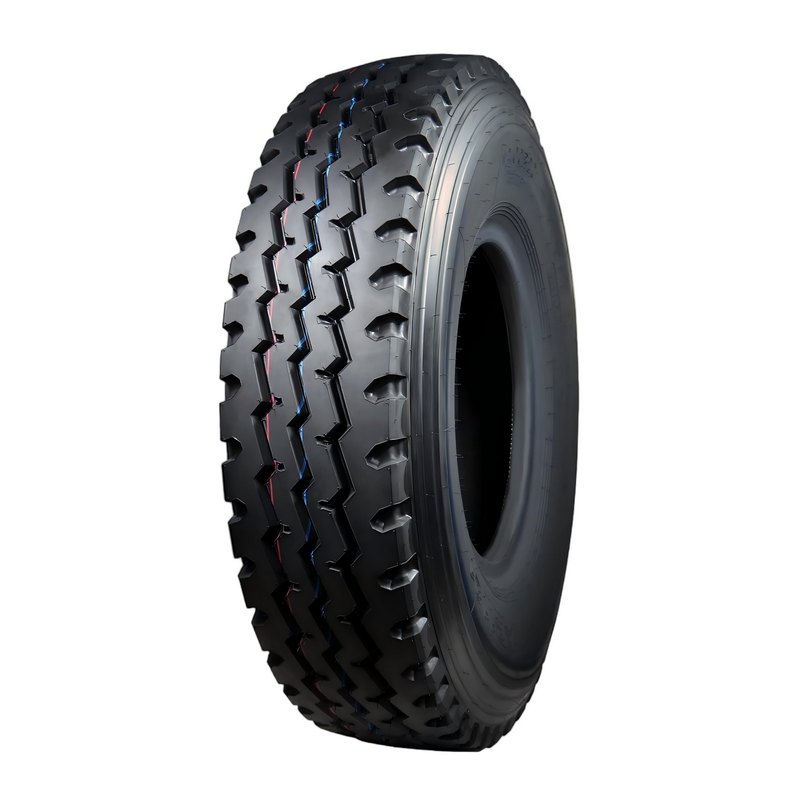
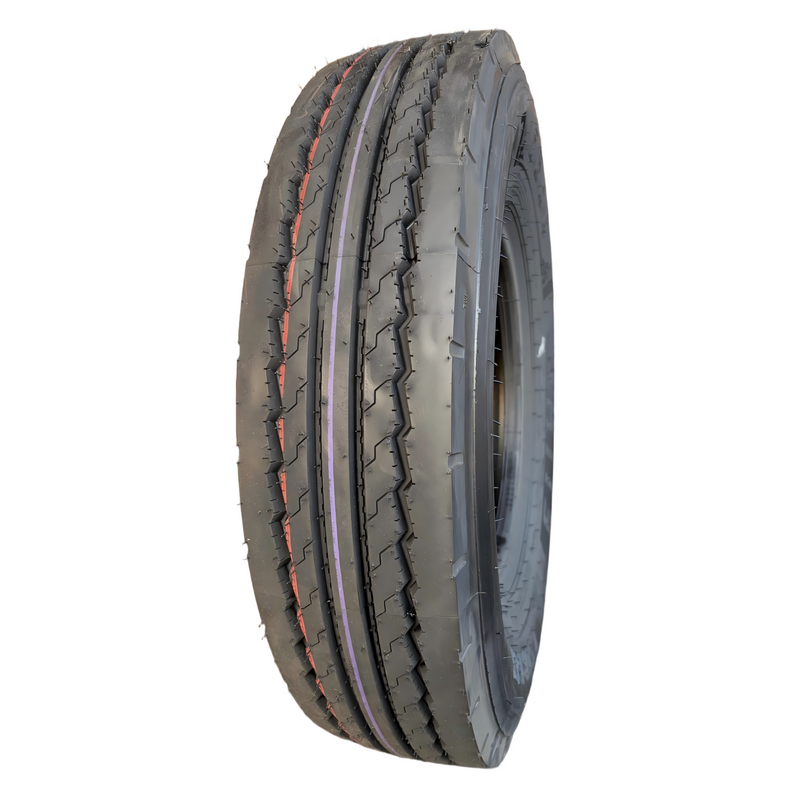
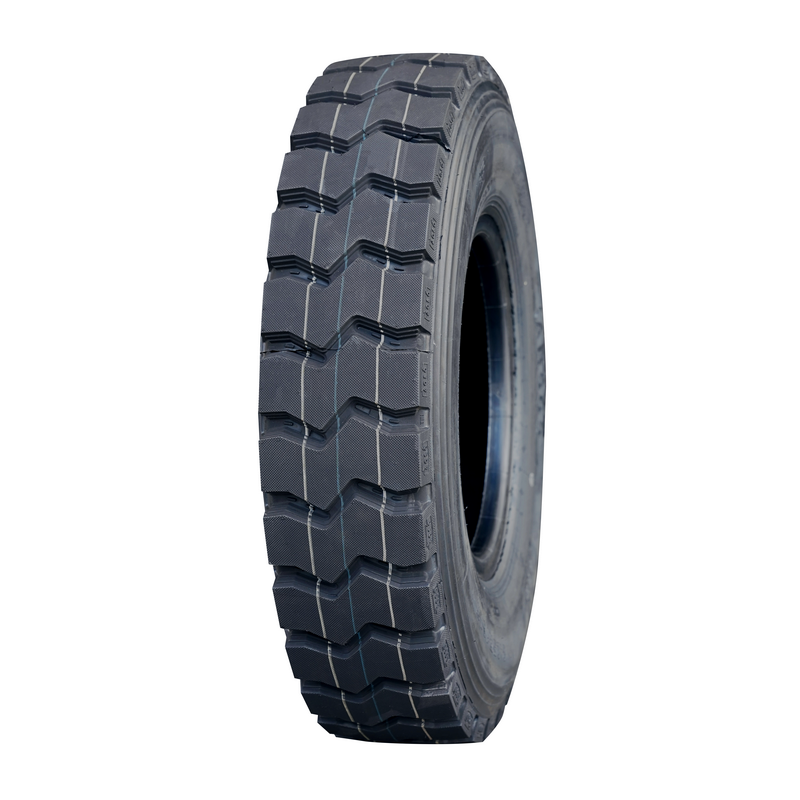
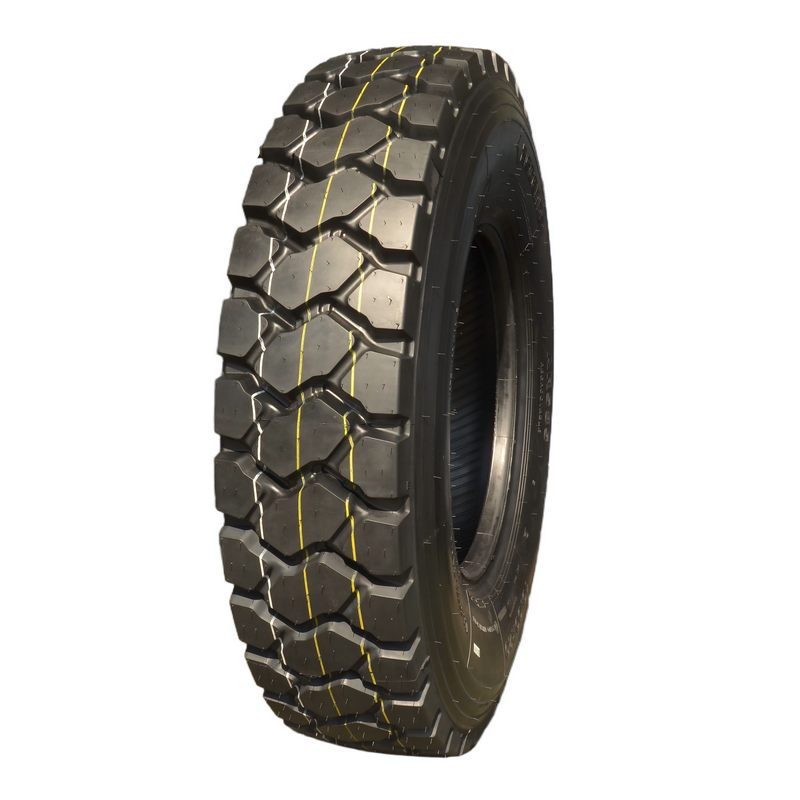
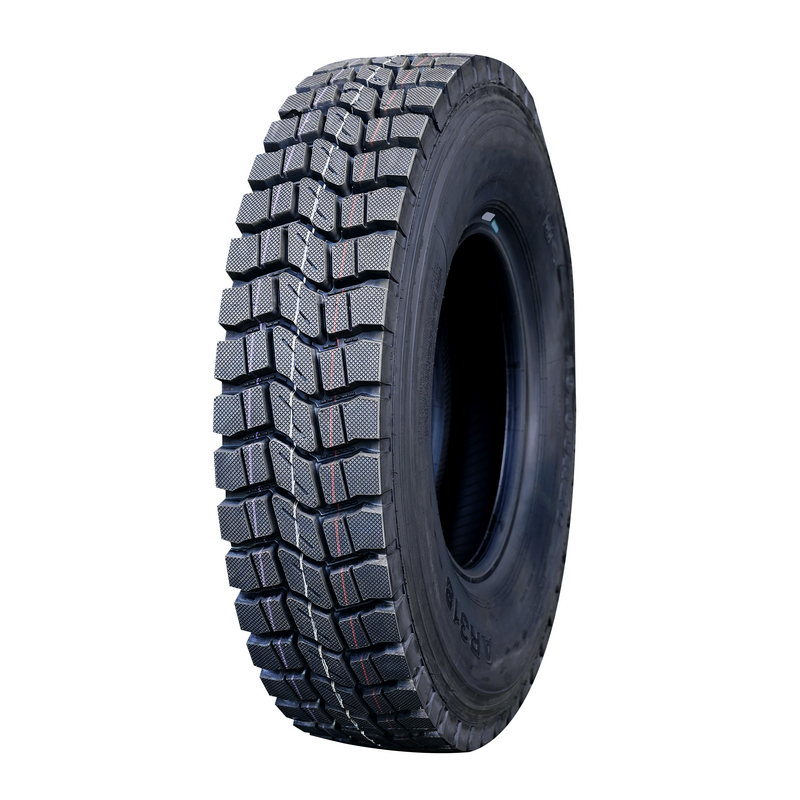
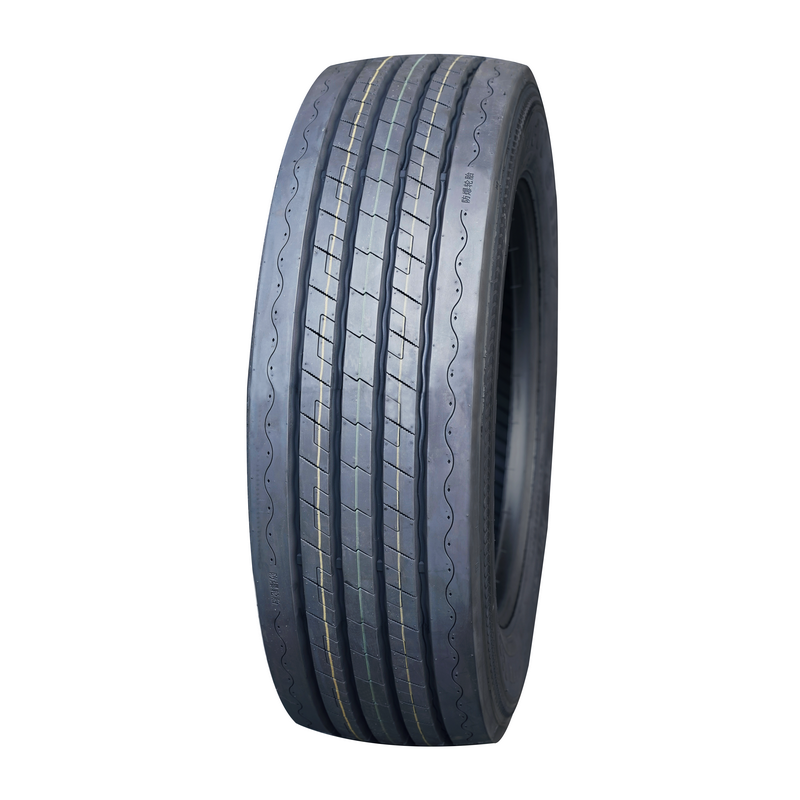
Tread pattern is not cosmetic—it’s functional engineering calibrated to contact patch behavior. Highway-focused ribbed treads maximize straight-line stability and minimize rolling resistance through continuous grooves and rigid tread blocks. Urban applications demand aggressive block patterns with open shoulders and deep siping to evacuate water, absorb braking forces, and resist irregular wear from stop-and-go traffic. Off-pavement operations—including gravel hauls, construction sites, and logging roads—require deep, widely spaced lugs with self-cleaning voids to maintain bite and resist stone drilling.
Leading manufacturers now engineer region-specific tread molds backed by multi-year field validation. For example, a Midwest grain hauler benefits more from an all-position tire with reinforced shoulder ribs and moderate lug depth than from a pure highway rib—or a dedicated off-road lug. Matching tread geometry to dominant road surface isn’t optional; it’s the foundation of predictable wear, safe handling, and extended casing life.
Reliability in commercial tires isn’t anecdotal—it’s validated through decades of real-world service data, standardized testing, and third-party benchmarking. Consistent performance under sustained high-load, high-speed conditions hinges on two inseparable elements: structural integrity (casing design and steel belt integrity) and compound resilience (heat dispersion, adhesion strength, and fatigue resistance).
Premium drive and trailer tires routinely exceed 150,000 miles in regional service and 250,000 miles in long-haul applications before requiring retreading—figures verified by TRA field studies and major carrier maintenance logs. This longevity stems from deliberate engineering choices: optimized belt angles for load distribution, robust carcass plies for impact resistance, and tread compounds formulated for thermal stability at sustained 65+ mph operation.
Steer tires prioritize shoulder durability and even wear—featuring reinforced shoulder blocks and dense siping to resist feathering and cupping. Drive tires emphasize high-grip compounds and aggressive tread depth for consistent traction in wet/dry conditions without sacrificing mileage. Trailer tires focus on low rolling resistance and casing robustness to support heavy payloads over extended distances.
| Tire Type | Typical Application | Key Reliability Feature | Expected Service Life (miles) |
|---|---|---|---|
| Steer Tire | Front axle | Superior wear resistance and shoulder reinforcement | 120,000 – 150,000 |
| Drive Tire | Rear axle/traction | High-grip compound, deep tread, optimized belt package | 150,000 – 200,000 |
| Trailer Tire | Load support | Robust casing, low rolling resistance, heat-dissipating tread design | 100,000 – 130,000 |
Structured preventive maintenance—especially consistent inflation pressure management and wheel alignment—extends these intervals by 15–20%. Critically, fleet data confirms that properly matched tires reduce unscheduled service events by up to 40% compared to generic or mismatched alternatives. Ultimately, proven reliability emerges not from marketing claims—but from the convergence of TRA-compliant design, field-validated materials, and disciplined operational discipline. Whether navigating urban congestion or crossing continental corridors, a high-performance commercial tire delivers safety, consistency, and measurable cost control—mile after mile.
The load index is a numeric code representing the maximum weight a tire can safely carry at its specified inflation pressure. It directly impacts tire safety by ensuring the tire can handle the vehicle’s load without compromising structural integrity.
Exceeding the rated load accelerates tread separation and structural degradation due to increased operating temperature and internal flexing. This can lead to premature failure and reduced service life.
Nano-reinforced compounds reduce heat generation and abrasion, offering a cooler-running tread that resists sharp gravel cuts while maintaining wet-grip on highways.
Fleet managers should consider load index, ply rating, tread pattern, rolling resistance, and the vehicle’s operating conditions for optimal performance and durability.
Rolling resistance accounts for up to 30% of vehicle energy loss. Reducing it by 3% can improve fuel economy by 1–1.5%, saving up to $1,200 annually per tractor.
 Hot News
2025-10-18
2025-10-17
2025-10-15
2025-10-14
2025-10-10
2025-09-22

Qingdao Surpass Rubber Technology Co., Ltd provides advanced tire manufacturing for global markets. Our R&D-driven approach delivers durable, energy-efficient tires with superior grip. 1M+ annual capacity, 50+ countries served.
T1 (QRCB Mansion), NO.6, Qinling Road, Qingdao, China
Copyright © 2025 by Qingdao Surpass Rubber Technology Co., Ltd Privacy Policy
 EN
EN